Category Archives: Posts in English

Approach and Methods to Appraise the Meaning of Verses in Quran

Meaning of Words and Verses

In any language, what is being conveyed in both speech and writing by the speaker or writer can only be understood if the meanings of words are shared through a convention. In speech much depends on the sound and tone of the voice. In writing the use a standardized spelling is necessary.

An Arabic word may have a range of meanings depending on context. It may be variations (nuances) related to the same meaning or a different meaning altogether. Which meaning an author decides to use depends on what idea or information he/she intends to convey. The reader must discern the context in which the idea is delivered. This requires the reader to read and understand the sentence where the word is used and also the information given by the author by in other sentences that surround it.

Therefore, when writing a narrative (letter, article or book), the author may apply:

  1. the same meaning to a word throughout
  2. give different meanings to the word when using it at different places

Meanings in Current Translations vs Possible Meanings

In reappraising the meaning of the Quran, I am compelled to examine alternative meanings of all words to see if they contribute to a more appropriate and fitting interpretation. Instead of assuming the meanings as used in the current understanding and practice (syariat) of Islam, I choose to look at meanings of words as used before as well as with the advent of Islam. An Arabic word may have a range of meanings depending on context. These may be variations (nuances) related to the same meaning or a different meaning altogether.

Meanings Taken by Traditional Translators

Currently there are many resources that provides meanings of verses by various translators. At the same time, some discusses the Arabic grammar, syntax and morphology for each word in the Holy Quran. The sites that I chose to use are:

Both resources use different approaches to provide the following functions:

  1. provides meanings of verses by various translators
  2. separate the verse into individual words
  3. identify root letters of the word
  4. assign the grammar to the word
  5. give the sites own literal meaning to each word
  6. list out words arising from the same root letters

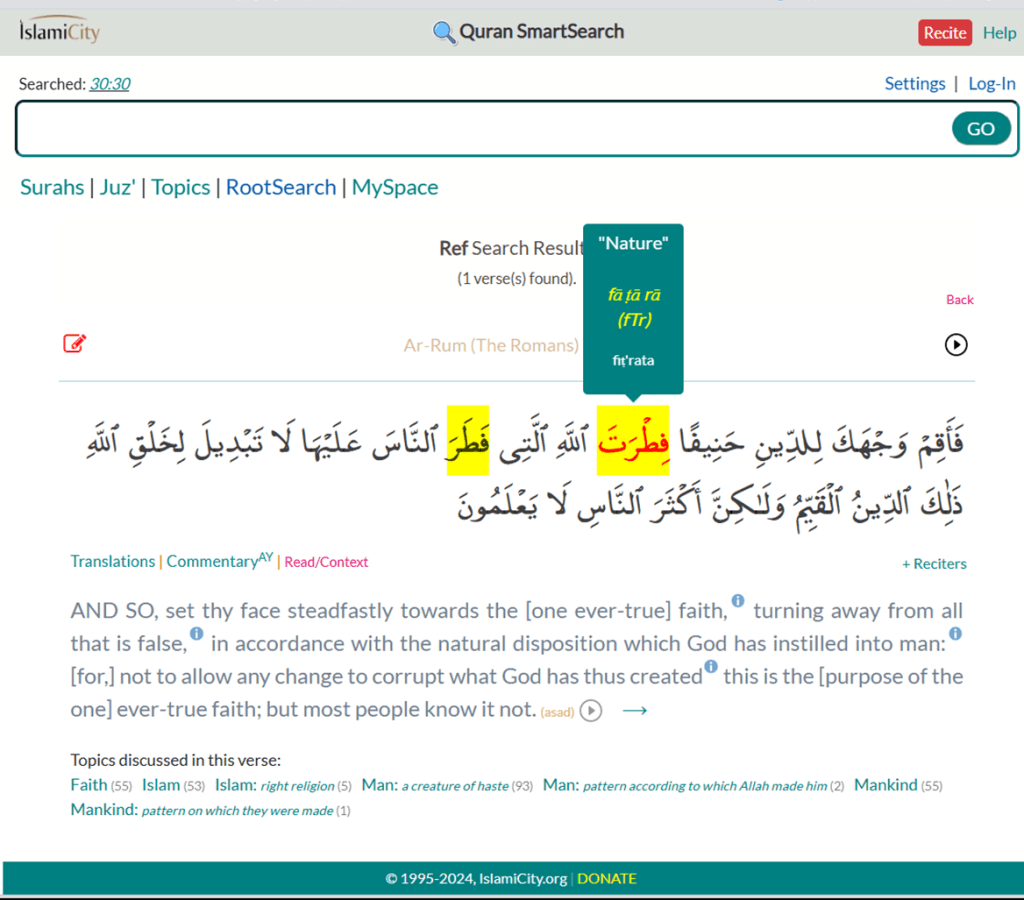
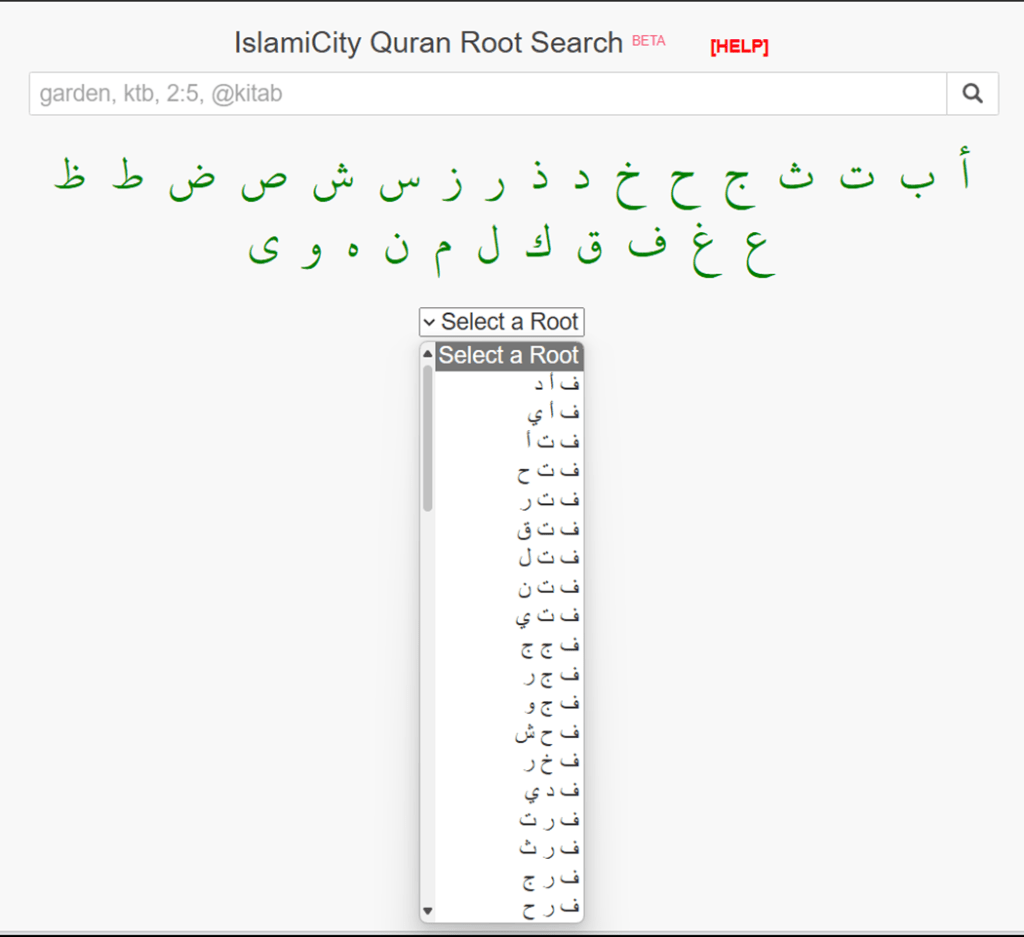
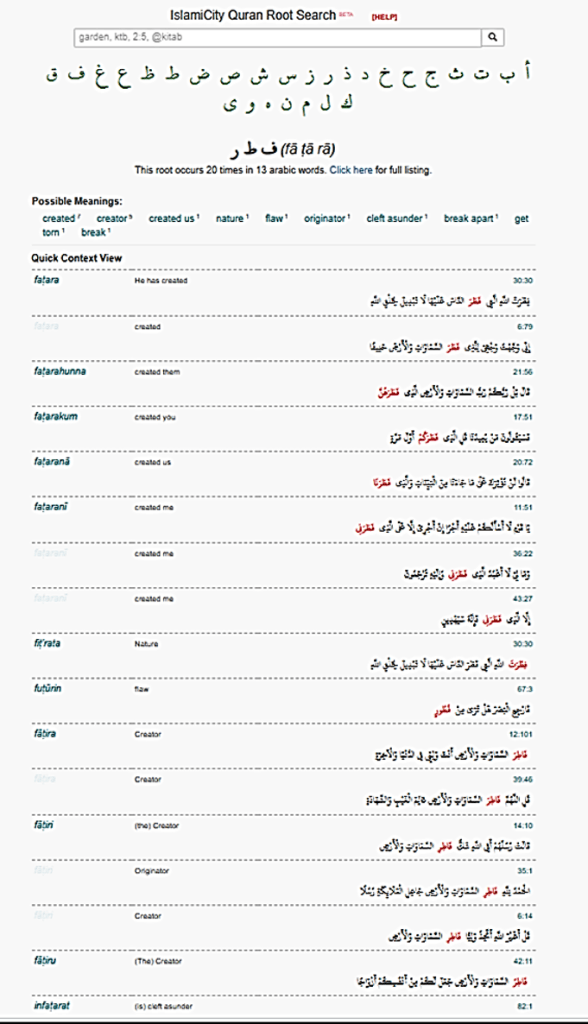
The print-screen images below provide a glimpse of the various functions.

Images From Corpus.quran Website

Corpus.quran Translations
Word For Word Meaning as Given by CorpusQuran.com
Identification of Root Letters of Words

Corpus.quran through its Quran dictionary also allows me to locate all verses where words derived from a root word occurs. Based on this, a person can see words derived from the same root letters have the same or different meanings when used elsewhere in the Quran. Since the surah and verse is known, the context within which the word is used can also be known.

Corpus.quran Verses Containingg Words Derived from the Same Root Letters

Images From IslamCity.org Website

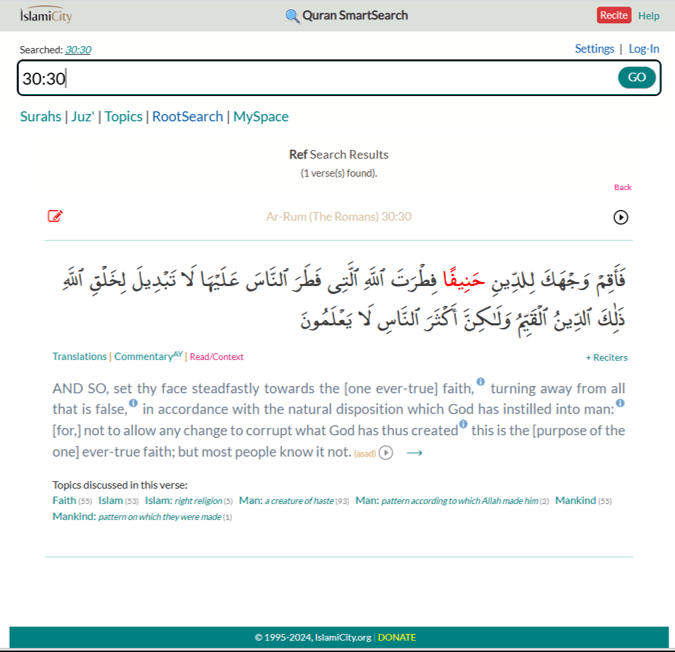
IsalmCity Translations

The IslamCity Website gives an easy way to search verses by surah and ayat.

IslamCity Search for Verses
IsalamCity Word Study
IslamCity Root Search
IslamCity List of Verses Containing Words from Same Root Letters

Seeking Alternative Meanings

Reappraisal of The Meaning of the Quran

In trying to understand the content of the Quran, I would like to reappraise the meanings of various verses because I am not quite happy with existing translations and interpretations. I believe meanings given to the verses of the Quran are often not compatible with the fundamental principles of the deen (الدِّينِ) as I understand it and so endeavor to seek the actual understanding of them. My main objective is to find out what is it I am unhappy with. From there I hope to discover alternative meanings or interpretations that are more satisfactory. Therefore, I am writing in the first-person singular. On occasion when I write in first person plural, I am assuming that there are persons of kindred spirit making the journey with me. Yet, there is no escaping from the fact that I am a born Muslim who have known and use existing interpretations and translations of the Quran. At the same time, having lived through the 50s-70s, my world view is influenced by modernist thinking of that era and earlier. Hence, I would take advantage of this reality as I try to discern meanings afresh.

A translation of the Quran must arise from an interpretation of it. So not only must the words be converted but the syntax should be transformed. Translators in English often depend on traditional interpreters such as Al-Tabari and Ibn Kathir which they consider as reliable sources. There is a thinking that words have inherent (harfiah حرفي) meanings but in the context of religion (shariah شَرِيعَة ) they have special meanings. Any re-interpretation is considered as a deviation from Islam. I have a feeling that each new translator vary the way they translate for the sake of readability (ease of understanding) rather than making a re-interpretation. This leads to the tendency for them to be affected by confirmation bias. Despite this, I would like to look out for probable substantial differences in the increasing number of translations in English.

In this discussion, I attempt to weigh the differences in interpretation made by a sample of translators in English. I hope to examine and discuss the meaning given by the translators to various verses, phrases and words. I hope to discover whether the meanings given are based on presumptions, rather than reflect the true message expounded by the Quran. For this reason, I must give priority to deriving the meanings of verse related to الدِّينِ, (addeen), عْبُدُ (abd) and الصَّلَاةَ (assalah). An understanding of these terms should be the guide for the understanding of the rest of the Quran. These terms together with rlated terms such as الْهُدٰۤى (alhuda), (sunatullah), (siratul mustaqim) and (fi sabilillah) are related as part of a continuum. As such, I must examine each and eveyone of them to understand the whole. In this article I am concentrating on the meaning of one of them i.e., الصَّلَاةَ. I choose to examine alternative meanings of key words to see if they contribute to a more appropriate and fitting interpretation. For me, it is better to look at meanings of words as used before and during the advent of Islam. Lane’s Lexicon satisfies this need. I must be careful though that despite Lane’s attempt at finding meanings of words before the advent of Islam, all of the lexicons or dictionaries he quoted were written after the advent of Islam, even if the original literature and other sources were pre-Islamic.
My attitude is to examine the words of the Quran as they stand and try to derive the principles of the deen from them. I hope a re-examination of the meanings given to each and every word will help me arrive at my own conviction regarding the deen.

I will try hard to attempt to understand the meaning of words and sentences without making prior assumptions. In his way, I hope to tease out from the elements contained in various verses and use them to construct the concepts of the deen i.e. how best to live a life in the service of Allah. There are a multitude of verses containing words derived from the root word صَلِّى. It would be difficult to look closely at all of them. So, at the moment I will look at representative samples. I have decided to begin with the rudimentary words closest to the root word and subsequently move on to those with qualifiers. This choice is arbitrary, but I hope to group and rearrange verses in a more logical manner later.

For each verse, I will try to structure the discussion in the following sequence

  1. A critical appraisal of the traditional translations
  2. A re-look at meaning of verses by re-examining the principal words within them
  3. The lessons I have learnt from the exercise

Fundamentals of the Islamic Way of Life

I am writing in the first-person plural to indicate that this is my personal view but as representative of all humans. I hope to present my views first and later provide evidence from the Quran, human experience and knowledge.

  1. Introduction
  2. The Apparent Complexity
  3. Life and Living
    1. Purpose of Life
      1. Dependence
    2. Laws of Nature (Fitrah)
    3. Inherent Abilities
    4. Beyond Survival
  4. Freewill and Constraints
  5. Trying to Understand and Feeling Lost

Introduction

Much of the world is in a state of loss and is longing for a direction. To me, Islam as a way of life has the answer to what people are seeking. It is a pity however, that Islam as it presents itself to-day is too chaotic for most people to understand. The incongruent practices among various groups of Muslims and their apparent predicament with regards the way life is to be lived has not made Islam an attractive proposition. It is true that there are currently increasingly many people genuinely attracted to it but their understanding and acceptance of it comes through either great effort or by chance discovery. I believe that Islam is the solution to the woes faced the world to-day.

The Apparent Complexity

Islam is supposed to be a holistic guide to the way of life. However, looking at the Muslim nations and communities there is a wide spectrum of understanding regarding it. Most Muslims does say that it is not a religion merely made up of rituals. It is supposed to provide guidance to all aspects of life. Yet, those of us who want to understand Islam will be quite confused by the various ways people, who call themselves Muslims, express their understanding of it and and practice it. Often what they say and what they practice is quite contradictory.

The proponents of Islam would like us to belief that that there is only one Islam. To them variations within it is few and not fundamental. This is far from the truth and indeed this contention does a disservice. There is a need to define the fundamentals, if Islam is to find universal acceptance. My discussion on the basic tenets of Islam is presented in another article.

One important aspect that is unclear is the belief in the purpose of life.

Life and Living

The universe consist of entities and forces. Entities are either animate and inanimate. Animate objects are said to be alive. Scientists has have definitions for what being alive means. However, in the end being alive is equated with possessing consciousness and the ability to respond to external stimuli. Once these characteristics are absent a person is considered dead (brain dead). Hence, a person may be in a state where his or her heart is still beating and the skin is still warm, but is considered dead if the brain is no longer functioning.

Being alive is dependent on being able to survive. Humans have an innate desire for survival but living is only possible because they have the innate ability to do so. Humans have inborn instincts for self-preservation and the ability to think, learn and make decisions. They are able, to a certain extent, to respond to and manipulate the environment, plus use things within it to make life easier,

Granularity. The constituent factors that support living in a proper manner appears to be both orderly and chaotic. We soon realize that behavior of much of things in nature occur in a predictable manner while others appear to be random. To overcome difficulties, humans develop various means, methods and habits. We become aware how precarious life is and that it will finally end. Life can be a bliss, hard or intolerable. The end of life is inevitable and may take many forms. Death may come early or late or unexpectedly.

Purpose of Life

The purpose of life is obviously to live. Living is a physiological process. The desire to live is inborn to the extent that having been born, living becomes mandatory. At birth, the baby cries as soon as it able to move its chest and therefore to breathe. In breathing, we humans exercises our ability to live by activating and maintaining the functions of various organs that ensure life by bringing oxygen to them. Other actions that follow: drinking, eating, defecating, urinating and sweating serve to sustain life. The need for food and water together with obtaining protection against the effects of a harsh environment drives human existence. It fosters our desire to study and learn the nature of the environment we live in. The environment is both external as well as that within the human body. Growing up we start to observe the characteristics of things around them and learn to make use of them to their advantage. The human individual soon realizes he/she is dependent on others.

Dependence

Humans may survive only in a conducive environment. The human baby is dependent on the mother for sustenance. (warmth, nutrition, shelter). Later the child is dependent on parents or other persons to feed and clothe them until they are able to fend for themselves. As a person matures there is an inherent drive to procreate which requires partnership with one or more partners of the opposite sex. Humans become aware that we are  dependent on others including the need for the sharing of resources. We realize that demands the adoption of certain rules which in turn requires organization into a community and a social hierarchy. The struggle to survive is extended to the community leading to the emergence of both cooperation and strife between groups. Humans have innate emotions in response to internal and external stimuli. Emotions affects behavior both in a positive and a negative manner. Attitudes can be expressed as prejudices, biases, likes, dislikes and predilections. Much of attitude and behavior has the purpose of preservation of the self or the group he/she belongs to. Many of these attitudes are unavoidable driven by the desire for survival. (conscious / unconscious).

Laws of Nature (Fitrah)

Humans survive because there is an environment that sustains life as long as we conform to its requirements. The orderliness of nature and the occasional apparent deviations from it are determined by inherent laws. From the perspective of a human being these laws relate to two areas:

  • innate characteristics of nature
  • the special characteristics of human beings
  • the inherent characteristics of each individual

It is within the restrictions and favorable conditions of these laws that the human being must fashion his way of living. So even before we know the purpose of life there is first a need how to live. However, as we try to make decisions on how to live the question of the proper way and hence the reason for living will becomes apparent.

Inherent Abilities

Beyond Survival

However humans are not satisfied with knowing the mechanisms of living a life but there arise in the human consciousness the desire to know why we exist (the meaning of life itself) and how best (the right way) we should live. Hence the purpose and the way is intertwined. We find that thinking about it on our own do not give the answers. We yearn for answers from elsewhere that is beyond our comprehension.

Wanting something better or maintaining the status quo. Desire for change.

Freewill and Constraints

Trying to Understand and Feeling Lost

bewilderment

(2:23:8) ʿabdināOur slaveوَإِنْ كُنْتُمْ فِي رَيْبٍ مِمَّا نَزَّلْنَا عَلَىٰ عَبْدِنَا فَأْتُوا بِسُورَةٍ مِنْ مِثْلِهِ
(2:90:20) ʿibādihiHis servantsأَنْ يُنَزِّلَ اللَّهُ مِنْ فَضْلِهِ عَلَىٰ مَنْ يَشَاءُ مِنْ عِبَادِهِ
(2:178:11) wal-ʿabduand the slaveالْحُرُّ بِالْحُرِّ وَالْعَبْدُ
(2:178:12) bil-ʿabdifor the slaveبِالْعَبْدِ وَالْأُنْثَىٰ بِالْأُنْثَىٰ
(2:186:3) ʿibādīMy servantsوَإِذَا سَأَلَكَ عِبَادِي عَنِّي فَإِنِّي قَرِيبٌ
(2:207:11) bil-ʿibādito His servantsوَاللَّهُ رَءُوفٌ بِالْعِبَادِ
(2:221:18) walaʿabdunand a bondmanوَلَعَبْدٌ مُؤْمِنٌ خَيْرٌ مِنْ مُشْرِكٍ وَلَوْ أَعْجَبَكُمْ
(3:15:24) bil-ʿibādiof (His) slavesوَأَزْوَاجٌ مُطَهَّرَةٌ وَرِضْوَانٌ مِنَ اللَّهِ وَاللَّهُ بَصِيرٌ بِالْعِبَادِ
(3:20:26) bil-ʿibādiof [His] slavesوَإِنْ تَوَلَّوْا فَإِنَّمَا عَلَيْكَ الْبَلَاغُ وَاللَّهُ بَصِيرٌ بِالْعِبَادِ
(3:30:26) bil-ʿibādito (His) [the] slavesوَيُحَذِّرُكُمُ اللَّهُ نَفْسَهُ وَاللَّهُ رَءُوفٌ بِالْعِبَادِ
(3:79:14) ʿibādanworshippersثُمَّ يَقُولَ لِلنَّاسِ كُونُوا عِبَادًا لِي مِنْ دُونِ اللَّهِ
(3:182:9) lil’ʿabīdito (His) slavesذَٰلِكَ بِمَا قَدَّمَتْ أَيْدِيكُمْ وَأَنَّ اللَّهَ لَيْسَ بِظَلَّامٍ لِلْعَبِيدِ
(4:118:6) ʿibādikayour slavesوَقَالَ لَأَتَّخِذَنَّ مِنْ عِبَادِكَ نَصِيبًا مَفْرُوضًا
(4:172:6) ʿabdana slaveلَنْ يَسْتَنْكِفَ الْمَسِيحُ أَنْ يَكُونَ عَبْدًا لِلَّهِ
(5:118:4) ʿibāduka(are) Your slavesإِنْ تُعَذِّبْهُمْ فَإِنَّهُمْ عِبَادُكَ وَإِنْ تَغْفِرْ لَهُمْ فَإِنَّكَ أَنْتَ الْعَزِيزُ الْحَكِيمُ
(6:18:4) ʿibādihiHis slavesوَهُوَ الْقَاهِرُ فَوْقَ عِبَادِهِ وَهُوَ الْحَكِيمُ الْخَبِيرُ
(6:61:4) ʿibādihiHis slavesوَهُوَ الْقَاهِرُ فَوْقَ عِبَادِهِ وَيُرْسِلُ عَلَيْكُمْ حَفَظَةً
(6:88:9) ʿibādihiHis slavesذَٰلِكَ هُدَى اللَّهِ يَهْدِي بِهِ مَنْ يَشَاءُ مِنْ عِبَادِهِ
(7:32:8) liʿibādihifor His slavesقُلْ مَنْ حَرَّمَ زِينَةَ اللَّهِ الَّتِي أَخْرَجَ لِعِبَادِهِ وَالطَّيِّبَاتِ مِنَ الرِّزْقِ
(7:128:14) ʿibādihiHis servantsإِنَّ الْأَرْضَ لِلَّهِ يُورِثُهَا مَنْ يَشَاءُ مِنْ عِبَادِهِ
(7:194:7) ʿibādun(are) slavesإِنَّ الَّذِينَ تَدْعُونَ مِنْ دُونِ اللَّهِ عِبَادٌ أَمْثَالُكُمْ
(8:41:23) ʿabdināOur slaveإِنْ كُنْتُمْ آمَنْتُمْ بِاللَّهِ وَمَا أَنْزَلْنَا عَلَىٰ عَبْدِنَا يَوْمَ الْفُرْقَانِ
(8:51:9) lil’ʿabīdito His slavesذَٰلِكَ بِمَا قَدَّمَتْ أَيْدِيكُمْ وَأَنَّ اللَّهَ لَيْسَ بِظَلَّامٍ لِلْعَبِيدِ
(9:104:9) ʿibādihiHis slavesأَلَمْ يَعْلَمُوا أَنَّ اللَّهَ هُوَ يَقْبَلُ التَّوْبَةَ عَنْ عِبَادِهِ
(10:107:21) ʿibādihiHis slavesيُصِيبُ بِهِ مَنْ يَشَاءُ مِنْ عِبَادِهِ وَهُوَ الْغَفُورُ الرَّحِيمُ
(12:24:18) ʿibādināOur slavesعَنْهُ السُّوءَ وَالْفَحْشَاءَ إِنَّهُ مِنْ عِبَادِنَا الْمُخْلَصِينَ
(14:11:16) ʿibādihiHis slavesوَلَٰكِنَّ اللَّهَ يَمُنُّ عَلَىٰ مَنْ يَشَاءُ مِنْ عِبَادِهِ
(14:31:2) liʿibādiyato My slavesقُلْ لِعِبَادِيَ الَّذِينَ آمَنُوا يُقِيمُوا الصَّلَاةَ
(15:40:2) ʿibādakaYour slavesإِلَّا عِبَادَكَ مِنْهُمُ الْمُخْلَصِينَ
(15:42:2) ʿibādīMy slavesإِنَّ عِبَادِي لَيْسَ لَكَ عَلَيْهِمْ سُلْطَانٌ
(15:49:2) ʿibādīMy slavesنَبِّئْ عِبَادِي أَنِّي أَنَا الْغَفُورُ الرَّحِيمُ
(16:2:10) ʿibādihiHis slavesيُنَزِّلُ الْمَلَائِكَةَ بِالرُّوحِ مِنْ أَمْرِهِ عَلَىٰ مَنْ يَشَاءُ مِنْ عِبَادِهِ
(16:75:4) ʿabdan(of) a slaveضَرَبَ اللَّهُ مَثَلًا عَبْدًا مَمْلُوكًا لَا يَقْدِرُ عَلَىٰ شَيْءٍ
(17:1:4) biʿabdihiHis servantسُبْحَانَ الَّذِي أَسْرَىٰ بِعَبْدِهِ لَيْلًا
(17:3:8) ʿabdana servantذُرِّيَّةَ مَنْ حَمَلْنَا مَعَ نُوحٍ إِنَّهُ كَانَ عَبْدًا شَكُورًا
(17:5:7) ʿibādanservantsفَإِذَا جَاءَ وَعْدُ أُولَاهُمَا بَعَثْنَا عَلَيْكُمْ عِبَادًا لَنَا أُولِي بَأْسٍ شَدِيدٍ
(17:17:11) ʿibādihi(of) His servantsوَكَفَىٰ بِرَبِّكَ بِذُنُوبِ عِبَادِهِ خَبِيرًا بَصِيرًا
(17:30:10) biʿibādihiof His slavesإِنَّهُ كَانَ بِعِبَادِهِ خَبِيرًا بَصِيرًا
(17:53:2) liʿibādīto My slavesوَقُلْ لِعِبَادِي يَقُولُوا الَّتِي هِيَ أَحْسَنُ
(17:65:2) ʿibādīMy slavesإِنَّ عِبَادِي لَيْسَ لَكَ عَلَيْهِمْ سُلْطَانٌ وَكَفَىٰ بِرَبِّكَ وَكِيلًا
(17:96:9) biʿibādihiof His slavesقُلْ كَفَىٰ بِاللَّهِ شَهِيدًا بَيْنِي وَبَيْنَكُمْ إِنَّهُ كَانَ بِعِبَادِهِ خَبِيرًا بَصِيرًا
(18:1:6) ʿabdihiHis slaveالْحَمْدُ لِلَّهِ الَّذِي أَنْزَلَ عَلَىٰ عَبْدِهِ الْكِتَابَ وَلَمْ يَجْعَلْ لَهُ عِوَجًا
(18:65:2) ʿabdana servantفَوَجَدَا عَبْدًا مِنْ عِبَادِنَا آتَيْنَاهُ رَحْمَةً مِنْ عِنْدِنَا
(18:65:4) ʿibādināOur servantsفَوَجَدَا عَبْدًا مِنْ عِبَادِنَا آتَيْنَاهُ رَحْمَةً مِنْ عِنْدِنَا
(18:102:6) ʿibādīMy servantsأَفَحَسِبَ الَّذِينَ كَفَرُوا أَنْ يَتَّخِذُوا عِبَادِي مِنْ دُونِي أَوْلِيَاءَ
(19:2:4) ʿabdahu(to) His servantذِكْرُ رَحْمَتِ رَبِّكَ عَبْدَهُ زَكَرِيَّا
(19:30:3) ʿabdua slaveقَالَ إِنِّي عَبْدُ اللَّهِ آتَانِيَ الْكِتَابَ وَجَعَلَنِي نَبِيًّا
(19:61:6) ʿibādahu(to) His slavesجَنَّاتِ عَدْنٍ الَّتِي وَعَدَ الرَّحْمَٰنُ عِبَادَهُ بِالْغَيْبِ
(19:63:6) ʿibādināOur slavesتِلْكَ الْجَنَّةُ الَّتِي نُورِثُ مِنْ عِبَادِنَا مَنْ كَانَ تَقِيًّا
(19:93:10) ʿabdan(as) a slaveإِنْ كُلُّ مَنْ فِي السَّمَاوَاتِ وَالْأَرْضِ إِلَّا آتِي الرَّحْمَٰنِ عَبْدًا
(20:77:7) biʿibādīwith My slavesوَلَقَدْ أَوْحَيْنَا إِلَىٰ مُوسَىٰ أَنْ أَسْرِ بِعِبَادِي
(21:26:7) ʿibādun(they are) slavesوَقَالُوا اتَّخَذَ الرَّحْمَٰنُ وَلَدًا سُبْحَانَهُ بَلْ عِبَادٌ مُكْرَمُونَ
(21:105:11) ʿibādiyaMy slavesوَلَقَدْ كَتَبْنَا فِي الزَّبُورِ مِنْ بَعْدِ الذِّكْرِ أَنَّ الْأَرْضَ يَرِثُهَا عِبَادِيَالصَّالِحُونَ
(22:10:9) lil’ʿabīdito His slavesذَٰلِكَ بِمَا قَدَّمَتْ يَدَاكَ وَأَنَّ اللَّهَ لَيْسَ بِظَلَّامٍ لِلْعَبِيدِ
(23:109:5) ʿibādīMy slavesإِنَّهُ كَانَ فَرِيقٌ مِنْ عِبَادِي يَقُولُونَ رَبَّنَا آمَنَّا
(24:32:6) ʿibādikumyour male slavesوَأَنْكِحُوا الْأَيَامَىٰ مِنْكُمْ وَالصَّالِحِينَ مِنْ عِبَادِكُمْ وَإِمَائِكُمْ
(25:1:6) ʿabdihiHis slaveتَبَارَكَ الَّذِي نَزَّلَ الْفُرْقَانَ عَلَىٰ عَبْدِهِ لِيَكُونَ لِلْعَالَمِينَ نَذِيرًا
(25:17:11) ʿibādīMy slavesفَيَقُولُ أَأَنْتُمْ أَضْلَلْتُمْ عِبَادِي هَٰؤُلَاءِ أَمْ هُمْ ضَلُّوا السَّبِيلَ
(25:58:12) ʿibādihi(of) His slavesوَكَفَىٰ بِهِ بِذُنُوبِ عِبَادِهِ خَبِيرًا
(25:63:1) waʿibāduAnd (the) slavesوَعِبَادُ الرَّحْمَٰنِ الَّذِينَ يَمْشُونَ عَلَى الْأَرْضِ هَوْنًا
(26:52:6) biʿibādīwith My slavesوَأَوْحَيْنَا إِلَىٰ مُوسَىٰ أَنْ أَسْرِ بِعِبَادِي إِنَّكُمْ مُتَّبَعُونَ
(27:15:14) ʿibādihiHis servantsوَقَالَا الْحَمْدُ لِلَّهِ الَّذِي فَضَّلَنَا عَلَىٰ كَثِيرٍ مِنْ عِبَادِهِ الْمُؤْمِنِينَ
(27:19:23) ʿibādikaYour slavesوَأَدْخِلْنِي بِرَحْمَتِكَ فِي عِبَادِكَ الصَّالِحِينَ
(27:59:6) ʿibādihiHis slavesقُلِ الْحَمْدُ لِلَّهِ وَسَلَامٌ عَلَىٰ عِبَادِهِ الَّذِينَ اصْطَفَىٰ
(28:82:14) ʿibādihiHis slavesوَيْكَأَنَّ اللَّهَ يَبْسُطُ الرِّزْقَ لِمَنْ يَشَاءُ مِنْ عِبَادِهِ وَيَقْدِرُ
(29:56:1) yāʿibādiyaO My servantsيَا عِبَادِيَ الَّذِينَ آمَنُوا إِنَّ أَرْضِي وَاسِعَةٌ فَإِيَّايَ فَاعْبُدُونِ
(29:62:7) ʿibādihiHis slavesاللَّهُ يَبْسُطُ الرِّزْقَ لِمَنْ يَشَاءُ مِنْ عِبَادِهِ وَيَقْدِرُ لَهُ
(30:48:25) ʿibādihiHis slavesفَإِذَا أَصَابَ بِهِ مَنْ يَشَاءُ مِنْ عِبَادِهِ إِذَا هُمْ يَسْتَبْشِرُونَ
(34:9:28) ʿabdinslaveإِنَّ فِي ذَٰلِكَ لَآيَةً لِكُلِّ عَبْدٍ مُنِيبٍ
(34:13:18) ʿibādiyaMy slavesاعْمَلُوا آلَ دَاوُودَ شُكْرًا وَقَلِيلٌ مِنْ عِبَادِيَ الشَّكُورُ
(34:39:9) ʿibādihiHis slavesقُلْ إِنَّ رَبِّي يَبْسُطُ الرِّزْقَ لِمَنْ يَشَاءُ مِنْ عِبَادِهِ وَيَقْدِرُ لَهُ
(35:28:12) ʿibādihiHis slavesإِنَّمَا يَخْشَى اللَّهَ مِنْ عِبَادِهِ الْعُلَمَاءُ
(35:31:14) biʿibādihiof His slavesإِنَّ اللَّهَ بِعِبَادِهِ لَخَبِيرٌ بَصِيرٌ
(35:32:7) ʿibādināOur slavesثُمَّ أَوْرَثْنَا الْكِتَابَ الَّذِينَ اصْطَفَيْنَا مِنْ عِبَادِنَا
(35:45:24) biʿibādihiof His slavesفَإِذَا جَاءَ أَجَلُهُمْ فَإِنَّ اللَّهَ كَانَ بِعِبَادِهِ بَصِيرًا
(36:30:3) l-ʿibādithe servantsيَا حَسْرَةً عَلَى الْعِبَادِ مَا يَأْتِيهِمْ مِنْ رَسُولٍ إِلَّا كَانُوا بِهِ يَسْتَهْزِئُونَ
(37:40:2) ʿibāda(the) slavesإِلَّا عِبَادَ اللَّهِ الْمُخْلَصِينَ
(37:74:2) ʿibāda(the) slavesإِلَّا عِبَادَ اللَّهِ الْمُخْلَصِينَ
(37:81:3) ʿibādināOur slavesإِنَّهُ مِنْ عِبَادِنَا الْمُؤْمِنِينَ
(37:111:3) ʿibādināOur slavesإِنَّهُ مِنْ عِبَادِنَا الْمُؤْمِنِينَ
(37:122:3) ʿibādināOur slavesإِنَّهُمَا مِنْ عِبَادِنَا الْمُؤْمِنِينَ
(37:128:2) ʿibāda(the) slavesإِلَّا عِبَادَ اللَّهِ الْمُخْلَصِينَ
(37:132:3) ʿibādināOur slavesإِنَّهُ مِنْ عِبَادِنَا الْمُؤْمِنِينَ
(37:160:2) ʿibāda(the) slavesإِلَّا عِبَادَ اللَّهِ الْمُخْلَصِينَ
(37:169:2) ʿibādaslavesلَكُنَّا عِبَادَ اللَّهِ الْمُخْلَصِينَ
(37:171:4) liʿibādināfor Our slavesوَلَقَدْ سَبَقَتْ كَلِمَتُنَا لِعِبَادِنَا الْمُرْسَلِينَ
(38:17:6) ʿabdanāOur slaveاصْبِرْ عَلَىٰ مَا يَقُولُونَ وَاذْكُرْ عَبْدَنَا دَاوُودَ ذَا الْأَيْدِ
(38:30:5) l-ʿabduslaveوَوَهَبْنَا لِدَاوُودَ سُلَيْمَانَ نِعْمَ الْعَبْدُ إِنَّهُ أَوَّابٌ
(38:41:2) ʿabdanāOur slaveوَاذْكُرْ عَبْدَنَا أَيُّوبَ إِذْ نَادَىٰ رَبَّهُ
(38:44:12) l-ʿabduslaveإِنَّا وَجَدْنَاهُ صَابِرًا نِعْمَ الْعَبْدُ إِنَّهُ أَوَّابٌ
(38:45:2) ʿibādanāOur slavesوَاذْكُرْ عِبَادَنَا إِبْرَاهِيمَ وَإِسْحَاقَ وَيَعْقُوبَ
(38:83:2) ʿibādakaYour slavesإِلَّا عِبَادَكَ مِنْهُمُ الْمُخْلَصِينَ
(39:7:9) liʿibādihiin His slavesإِنْ تَكْفُرُوا فَإِنَّ اللَّهَ غَنِيٌّ عَنْكُمْ وَلَا يَرْضَىٰ لِعِبَادِهِ الْكُفْرَ
(39:10:2) yāʿibādiO My slavesقُلْ يَا عِبَادِ الَّذِينَ آمَنُوا اتَّقُوا رَبَّكُمْ
(39:16:14) ʿibādahuHis slavesذَٰلِكَ يُخَوِّفُ اللَّهُ بِهِ عِبَادَهُ يَا عِبَادِ فَاتَّقُونِ
(39:16:15) yāʿibādiO My slavesذَٰلِكَ يُخَوِّفُ اللَّهُ بِهِ عِبَادَهُ يَا عِبَادِ فَاتَّقُونِ
(39:17:12) ʿibādi(to) My slavesوَأَنَابُوا إِلَى اللَّهِ لَهُمُ الْبُشْرَىٰ فَبَشِّرْ عِبَادِ
(39:36:4) ʿabdahu(for) His slaveأَلَيْسَ اللَّهُ بِكَافٍ عَبْدَهُ
(39:46:12) ʿibādikaYour slavesأَنْتَ تَحْكُمُ بَيْنَ عِبَادِكَ فِي مَا كَانُوا فِيهِ يَخْتَلِفُونَ
(39:53:2) yāʿibādiyaO My slavesقُلْ يَا عِبَادِيَ الَّذِينَ أَسْرَفُوا عَلَىٰ أَنْفُسِهِمْ لَا تَقْنَطُوا مِنْ رَحْمَةِ اللَّهِ
(40:15:13) ʿibādihiHis slavesيُلْقِي الرُّوحَ مِنْ أَمْرِهِ عَلَىٰ مَنْ يَشَاءُ مِنْ عِبَادِهِ
(40:31:14) lil’ʿibādifor (His) slavesوَمَا اللَّهُ يُرِيدُ ظُلْمًا لِلْعِبَادِ
(40:44:12) bil-ʿibādiof (His) slavesوَأُفَوِّضُ أَمْرِي إِلَى اللَّهِ إِنَّ اللَّهَ بَصِيرٌ بِالْعِبَادِ
(40:48:12) l-ʿibādi(His) slavesقَالَ الَّذِينَ اسْتَكْبَرُوا إِنَّا كُلٌّ فِيهَا إِنَّ اللَّهَ قَدْ حَكَمَ بَيْنَ الْعِبَادِ
(40:85:14) ʿibādihiHis slavesسُنَّتَ اللَّهِ الَّتِي قَدْ خَلَتْ فِي عِبَادِهِ وَخَسِرَ هُنَالِكَ الْكَافِرُونَ
(41:46:11) lil’ʿabīdito His slavesوَمَنْ أَسَاءَ فَعَلَيْهَا وَمَا رَبُّكَ بِظَلَّامٍ لِلْعَبِيدِ
(42:19:3) biʿibādihiwith His slavesاللَّهُ لَطِيفٌ بِعِبَادِهِ يَرْزُقُ مَنْ يَشَاءُ وَهُوَ الْقَوِيُّ الْعَزِيزُ
(42:23:5) ʿibādahu(to) His slavesذَٰلِكَ الَّذِي يُبَشِّرُ اللَّهُ عِبَادَهُ الَّذِينَ آمَنُوا وَعَمِلُوا الصَّالِحَاتِ
(42:25:6) ʿibādihiHis slavesوَهُوَ الَّذِي يَقْبَلُ التَّوْبَةَ عَنْ عِبَادِهِ وَيَعْفُو عَنِ السَّيِّئَاتِ
(42:27:5) liʿibādihifor His slavesوَلَوْ بَسَطَ اللَّهُ الرِّزْقَ لِعِبَادِهِ لَبَغَوْا فِي الْأَرْضِ
(42:27:15) biʿibādihiof His slavesوَلَٰكِنْ يُنَزِّلُ بِقَدَرٍ مَا يَشَاءُ إِنَّهُ بِعِبَادِهِ خَبِيرٌ بَصِيرٌ
(42:52:22) ʿibādināOur slavesوَلَٰكِنْ جَعَلْنَاهُ نُورًا نَهْدِي بِهِ مَنْ نَشَاءُ مِنْ عِبَادِنَا
(43:15:4) ʿibādihiHis slavesوَجَعَلُوا لَهُ مِنْ عِبَادِهِ جُزْءًا إِنَّ الْإِنْسَانَ لَكَفُورٌ مُبِينٌ
(43:19:5) ʿibādu(are) slavesوَجَعَلُوا الْمَلَائِكَةَ الَّذِينَ هُمْ عِبَادُ الرَّحْمَٰنِ إِنَاثًا
(43:59:4) ʿabduna slaveإِنْ هُوَ إِلَّا عَبْدٌ أَنْعَمْنَا عَلَيْهِ وَجَعَلْنَاهُ مَثَلًا لِبَنِي إِسْرَائِيلَ
(43:68:1) yāʿibādiO My slavesيَا عِبَادِ لَا خَوْفٌ عَلَيْكُمُ الْيَوْمَ وَلَا أَنْتُمْ تَحْزَنُونَ
(44:18:4) ʿibāda(the) servantsأَنْ أَدُّوا إِلَيَّ عِبَادَ اللَّهِ إِنِّي لَكُمْ رَسُولٌ أَمِينٌ
(44:23:2) biʿibādīwith My slavesفَأَسْرِ بِعِبَادِي لَيْلًا إِنَّكُمْ مُتَّبَعُونَ
(50:8:4) ʿabdinslaveتَبْصِرَةً وَذِكْرَىٰ لِكُلِّ عَبْدٍ مُنِيبٍ
(50:11:2) lil’ʿibādifor the slavesرِزْقًا لِلْعِبَادِ
(50:29:8) lil’ʿabīdito My slavesمَا يُبَدَّلُ الْقَوْلُ لَدَيَّ وَمَا أَنَا بِظَلَّامٍ لِلْعَبِيدِ
(53:10:3) ʿabdihiHis slaveفَأَوْحَىٰ إِلَىٰ عَبْدِهِ مَا أَوْحَىٰ
(54:9:6) ʿabdanāOur slaveكَذَّبَتْ قَبْلَهُمْ قَوْمُ نُوحٍ فَكَذَّبُوا عَبْدَنَا وَقَالُوا مَجْنُونٌ وَازْدُجِرَ
(57:9:5) ʿabdihiHis slaveهُوَ الَّذِي يُنَزِّلُ عَلَىٰ عَبْدِهِ آيَاتٍ بَيِّنَاتٍ
(66:10:12) ʿabdaynitwo [slaves]كَانَتَا تَحْتَ عَبْدَيْنِ مِنْ عِبَادِنَا صَالِحَيْنِ فَخَانَتَاهُمَا
(66:10:14) ʿibādināOur slavesكَانَتَا تَحْتَ عَبْدَيْنِ مِنْ عِبَادِنَا صَالِحَيْنِ فَخَانَتَاهُمَا
(71:27:5) ʿibādakaYour slavesإِنَّكَ إِنْ تَذَرْهُمْ يُضِلُّوا عِبَادَكَ وَلَا يَلِدُوا إِلَّا فَاجِرًا كَفَّارًا
(72:19:4) ʿabdu(the) slaveوَأَنَّهُ لَمَّا قَامَ عَبْدُ اللَّهِ يَدْعُوهُ كَادُوا يَكُونُونَ عَلَيْهِ لِبَدًا
(76:6:4) ʿibādu(the) slavesعَيْنًا يَشْرَبُ بِهَا عِبَادُ اللَّهِ يُفَجِّرُونَهَا تَفْجِيرًا
(89:29:3) ʿibādīMy slavesفَادْخُلِي فِي عِبَادِي
(96:10:1) ʿabdanA slaveعَبْدًا إِذَا صَلَّىٰ
(2:23:8) ʿabdinā Our slave
وَإِنْ كُنْتُمْ فِي رَيْبٍ مِمَّا نَزَّلْنَا عَلَىٰ عَبْدِنَا فَأْتُوا بِسُورَةٍ مِنْ مِثْلِهِ

The End of the Politics of Hate (4)

The worst form of politics of hate is the propagation of hatred for the country. It is, I believe, political in origin. It is easy for people to mix up their hatred for the government of the day with hatred for the country. The previous government formed by coalitions made up more or  less (but not exactly) the same parties ruled for 60 years. Because of the duration, may be people can be excused if they equate the country with the government.

We may be led to think that the occurrence of denigration of the national flag, the national anthem and articles of the constitution itself is a result this confusion by people who did not support the then government. However, since the same people has succeeded to elect the parties of their choice to form a government, we would expect them to support the new government and hence also to support the country.

Yet, this does not appear to be so. I was expecting that the annual National (Merdeka) day celebrations (twice now) would see a groundswell of audience participation from people who support the new government who were absent in previous celebrations. What I expected did not materialize. The RTM TV camera panned up and down the rows of attendees but failed to find significant numbers of members of a certain segment of the population other than the folks who have been attending faithfully over the years. The composition of participants seen on the ceremony of Proclamation of Independence in 1957 was not replicated.

Then, there were the incidences, just prior to 31st August 2019, of flying the national flag upside down, which was numerous enough not to be excused as geometrical mistakes. The people, it would appear, are members of or at least supporters of a party in government or supporters of a party that supports the current federal government. The misappropriation of hatred for items that are symbols of the nation as opposed to those associated with the political party in government has not been eliminated. Maybe there was no confusion at all.

Recently, a group of people refused to stand up in respect when the National anthem was played. It is quite likely that there are people who hate their own country and what it stands for.

I think there is no end yet to the politics of hatred for the country. The change in government has not made a telling difference.

The End of an Episode of Politics of Hatred (1)

Since 2018 TunDM is ready to cooperate with DSAI a person he regarded previously (since 1998) as a person he considers as amoral and unfit to be a future Prime Minister . On his part DatukSAI, previously gave the title of ‘the Mighty Pharaoh’ meaning a cruel despot. It may be a big u-turn but at least, with the rapprochement between them, we see the end of an episode of politics of hatred between the two personalities which also divided the country into two opposing camps. Perhaps, we should be thankful?